The Ad Creative Framework I Use for Med Spa Clients
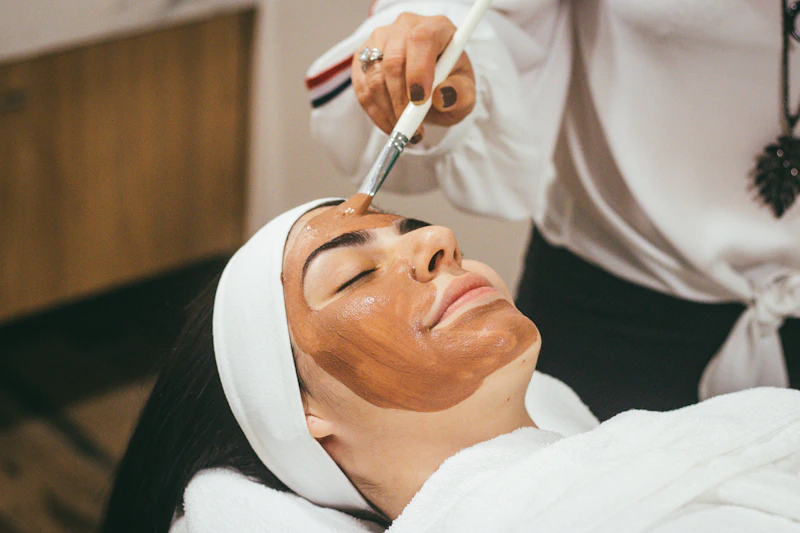
The Med Spa Ad That Looks Like Every Other Med Spa Ad
Open Instagram right now and scroll until you see a med spa ad. It’ll take about thirty seconds. And when you find it, I can already tell you what it looks like: a stock photo of a woman with perfect skin, a headline that says something like “Look Your Best This Summer,” and a button that says “Book Now.”
That ad will not book a single appointment. And the med spa running it will blame Meta’s algorithm, their ads manager, or “the market” before they ever question the creative itself.
I’ve worked with over 40 beauty and wellness brands across Singapore, Tokyo, and California — including TruGlow Medical Aesthetics, where we generated 4M+ reach and 14,230 warm leads. Med spas are some of the most profitable businesses I’ve helped scale — but they’re also the ones most likely to waste money on ad creative that says nothing, shows nothing, and converts no one. As a med spa marketing agency, I’ve seen the gap between a med spa spending $8K/month on ads that break even and one spending $8K/month at a 4x ROAS — and it almost always comes down to the creative framework behind the ads.
Here’s the one I use.
The Three Creative Types That Actually Book Appointments
After years of testing across dozens of med spa accounts, I’ve narrowed effective ad creative down to three categories. Everything else is noise.
1. Before-and-Afters (Done Right)
This is the most powerful ad format in aesthetics — and the most commonly botched. A good before-and-after does the selling for you. A bad one gets flagged by Meta, looks fake, or blends into the sea of identical comparison shots.
What works: Real client transformations shot in consistent lighting, same angle, minimal editing. Video before-and-afters outperform static images by 2-3x in my experience because they’re harder to fake and easier to believe. A fifteen-second reel showing the treatment in progress followed by the healed result outperforms a polished side-by-side every time.
What doesn’t: Over-edited photos with different lighting between the before and after. Anything that looks like it was shot in two different rooms. Stock-photo “transformations” that nobody believes. And if you’re running before-and-afters without client consent documentation, you’re building on a legal liability, not a marketing asset.
The key detail most med spas miss: the caption matters as much as the image. Don’t just show the result — explain the treatment, the timeline, the downtime, and what the client’s concern was before they came in. That context is what turns a scroll-past into a saved post. And saved posts become ad creative that converts. (I wrote about this organic-to-paid pipeline in detail in my Meta ads piece — the same principle applies here.)
2. Practitioner-Led Content
The second highest-performing creative category is the practitioner talking directly to camera. Not reading a script. Not delivering a polished brand message. Actually explaining a treatment, answering a common question, or walking through what a consultation looks like.
This works because people book practitioners, not brands. A potential client deciding between three med spas offering the same Botox service will pick the one where they’ve already “met” the injector through content. That parasocial trust is built through practitioner-led video, and it’s nearly impossible to replicate with product shots or stock photography.
I have a client whose lead practitioner films two-minute explainer videos on her phone between appointments. No lighting setup, no script, no editing beyond a simple cut. Those videos consistently outperform their $3K professionally produced ad spots. The reason is obvious once you see it: one feels like a person talking to you, and the other feels like an advertisement.
3. Treatment Explainers and Myth-Busters
The third category targets people who are interested but not yet ready to book — the consideration stage. These are educational pieces that answer the questions potential clients are already Googling: “Does microneedling hurt?” “How long does filler last?” “What’s the difference between Botox and Dysport?”
This is the content layer most med spas skip entirely. They go straight from awareness (here’s our brand) to conversion (book now) and wonder why their booking rate is low. There’s a nurture gap, and treatment explainers fill it. I covered the attract-nurture-convert framework in my revenue mapping post — the same job-assignment logic applies to ad creative.
Myth-busters are a subcategory that performs especially well on TikTok. “Three things your med spa won’t tell you about lip filler” gets attention because it creates an information gap. Done honestly — not as clickbait — this format builds trust and positions the practitioner as an authority. That authority is what makes someone book with you instead of the cheaper option down the street.
What Doesn’t Work (and Why Brands Keep Doing It)
Stock-photo ads. If your ad creative could belong to any med spa in the country, it won’t work for yours. Generic imagery signals a generic experience, and med spa clients are choosing based on trust and specificity.
“Book Now” ads with no context. Running conversion-optimized ads to a cold audience with nothing but a service name and a CTA is the paid media equivalent of asking someone to marry you on the first date. It doesn’t work, and it trains the algorithm to find low-quality clicks.
Over-produced brand videos. That $5K sizzle reel your videographer shot looks beautiful and converts terribly. Any TikTok marketing agency worth hiring will tell you the same thing: on TikTok and Meta in 2026, polish signals “advertisement” and the thumb scrolls past. Raw, informative, personality-driven content outperforms cinematic content in every med spa account I manage. Every single one.
The reason brands keep running these formats is inertia. It’s what their last agency did. It’s what their competitor appears to be doing. It feels “professional.” But professional-looking and high-converting are different things in paid social, and the sooner a med spa marketing team accepts that, the sooner the numbers change.
The Creative Testing System
Having the right creative types is half the equation. The other half is a testing system that tells you which specific pieces to scale.
Here’s the structure I run for every med spa client through our content and paid media management:
Week 1-2: Produce and post organically. Create 8-12 pieces across the three categories above. Post them organically and track engagement signals — saves, shares, DMs, comments with intent (“How much is this?” or “Do you offer this treatment?”). The organic audience is your free focus group.
Week 3: Launch top performers as ads. Take the 3-4 pieces with the strongest intent signals and launch them as ad creative. Don’t re-edit them. Don’t add a logo watermark. Run them as-is, because the organic format is what earned the engagement.
Week 4: Analyze, cut, and iterate. Kill the underperformers after sufficient spend (I use $150-200 per creative as a minimum threshold before making a call). Double budget on the winners. Start producing the next round of organic content based on what the data told you.
Monthly: Review creative fatigue. Even the best ad creative has a shelf life. I typically see performance degrade after 3-5 weeks of continuous spend on a single piece. The organic content engine should be feeding you new candidates continuously so you never have to scramble for creative when a winner burns out. (I’ve written about how to turn a single content shoot into 30 days of ads — the production framework that keeps that engine running.)
This cycle means you’re never guessing. You’re never launching untested creative with a prayer. Every dollar of ad spend goes behind content that has already proven it resonates. Over a 90-day period, this system compounds — your creative library grows, your data on what works deepens, and your cost per acquisition drops because you’re only scaling what the audience already validated.
The Difference Is the System
Most med spas don’t have a creative problem — they have a creative systems problem. They produce content reactively, test it expensively, and replace it randomly. The framework above turns that into a repeatable loop where organic content feeds paid creative, paid data informs the next round of organic, and every piece of content has a clear job and a clear metric to prove it did that job.
You could implement this yourself. The framework is right here. But if you’d rather skip the three months of building the system from scratch and start with a team that’s already run this playbook across dozens of med spa accounts — book a free call and I’ll walk you through exactly how we’d apply it to your practice.
STOP POSTING AND HOPING.
Let's build a content system that drives revenue for your brand.
Backed by our 30-day money-back guarantee